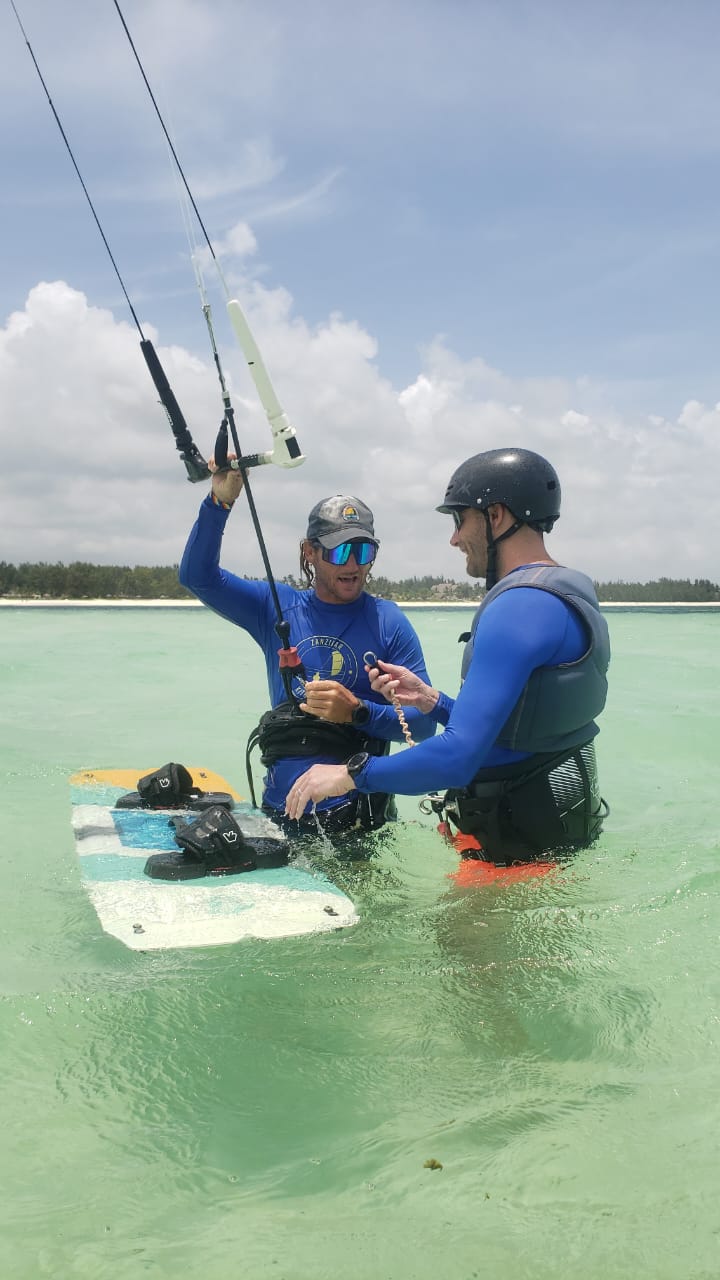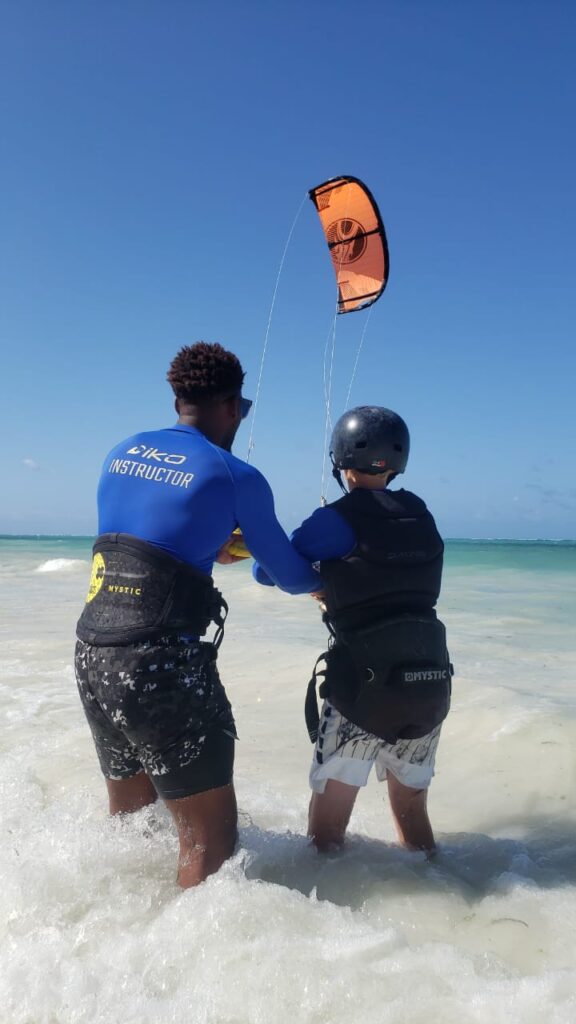
Kitesurfing lessons in Paje, Zanzibar are ideal for beginners thanks to the area's shallow lagoon, warm water and consistent trade winds. Zanzibar Kitesurfing provides private coaching in Paje and nearby Jambiani, helping beginners, couples, families and returning riders progress safely from first kite control to independent riding.Operating since 2020, our local instructors teach in the conditions best suited to each student, adapting daily to wind, tide and rider level. Most complete beginners require between 9 and 12 hours of instruction to reach basic riding independence.

Why Is Paje One Of The Best Places In The World To Learn Kitesurfing?
kitesurfing lessons in Paje Zanzibar
Paje Beach has become one of the world’s most recognised beginner kitesurfing destinations for three simple reasons:
1. Shallow Lagoon Conditions
During much of the tidal cycle, students can stand comfortably in waist-deep water.
This dramatically improves confidence and accelerates progression.
2. Consistent Trade Winds
Zanzibar benefits from two major wind seasons:
- Kusi (June–October)
- Kaskazi (December–March)
These provide reliable conditions for learning and progression.
3. Warm Water Year-Round
Unlike many European destinations, wetsuits are generally unnecessary.
Students can focus entirely on learning rather than managing cold-water conditions.
Who Are Our Kitesurfing Lessons Designed For?
Complete Beginners
Never touched a kite before?
Perfect.
Most of our students arrive with zero experience.
We start with safety systems, kite control and wind awareness before moving into the water.
Returning Riders
Many visitors learned years ago and need structured coaching to rebuild confidence.
We help riders regain skills safely and efficiently.
Couples
Private couples sessions are ideal for travellers wanting to learn together while progressing at their own pace.
Families
Family-friendly lesson plans can be adapted for younger students and mixed ability groups.
Adventure Travellers
Short on time?
Our intensive progression sessions maximise learning during shorter Zanzibar holidays.
How Long Does It Take To Learn Kitesurfing In Paje?
This is one of the most common questions we receive.
Typical Progression Timeline
Hours 1–2
- Wind theory
- Safety systems
- Kite control
- Launching and landing
Hours 2–4
- Body dragging
- Power control
- Directional control
Hours 4–8
- Water starts
- First board rides
- Controlled stopping
Hours 8–12
- Riding both directions
- Upwind fundamentals
- Basic independence
Most beginners reach basic riding independence after approximately 9–12 hours of structured instruction.
What Happens During A Kitesurfing Lesson?
Step 1: Safety Briefing
Before entering the water, students learn:
- Wind direction
- Safety systems
- Equipment handling
- Emergency procedures
Step 2: Kite Control
Students learn:
- Wind window theory
- Power generation
- Depower systems
- Controlled steering
Step 3: Body Dragging
Before using a board, students practise controlling the kite while moving through the water.
This develops confidence and kite awareness.
Step 4: Water Starts
Students learn how to combine kite power with board control.
This is where the first rides begin.
Step 5: Riding Progression
Focus shifts toward:
- Direction control
- Speed control
- Stopping safely
- Riding independently
Why Paje Lagoon Is Perfect For Beginner Kitesurfing
Paje’s lagoon offers conditions rarely found elsewhere.
Shallow Water
Students can stand during much of the learning process.
Flat Water
Reduced chop means faster progression.
Consistent Wind
Reliable trade winds create predictable learning conditions.
Wide Open Space
Large riding areas reduce congestion and improve safety.
Paje vs Jambiani For Kitesurfing Lessons
Many visitors ask which location is better.
Paje
Best For:
- First-time beginners
- Lagoon training
- Kite-and-stay holidays
- Social atmosphere
Jambiani
Best For:
- Quieter sessions
- Less crowded conditions
- Private coaching
- Relaxed beach environment
Because we are fully mobile instructors, we choose the best location each day based on wind, tide and student goals.
Zanzibar Wind Seasons Explained
Kusi Season (June–October)
Average wind:
18–25 knots
Ideal for:
- Beginners
- Progression riders
- Consistent daily sessions
Kaskazi Season (December–March)
Average wind:
14–20 knots
Ideal for:
- Beginners
- Freestyle training
- Relaxed learning pace
Private Lessons vs Group Lessons
Private Kitesurfing Lessons
Advantages:
- Faster progression
- Individual feedback
- Flexible scheduling
- Maximum water time
Best For
- Beginners
- Couples
- Short trips
- Nervous learners
Group Lessons
Advantages:
- Shared experience
- Lower cost per person
Best For
- Friends travelling together
- Families
- Budget-conscious travellers
Family & Couples Kitesurfing Lessons
Many people assume kitesurfing is only for young athletes.
In reality, successful students come from a wide range of ages and backgrounds.
With private coaching and appropriate conditions, couples and families often progress faster because lessons can be adapted to individual learning styles.
Kite & Stay Packages In Paje
For visitors wanting the easiest possible experience, Zanzibar Kitesurfing offers kite-and-stay packages.
Guests can stay in one of our four beautiful villas in Paje, located just 90 metres from the beach.
Benefits include:
- Walk directly to lessons
- No transport required
- Easy access to restaurants
- Flexible lesson scheduling
- Beachfront lifestyle experience
Kitesurfing Safety Standards
Safety is the foundation of every lesson.
Every student learns:
- Equipment safety checks
- Self-rescue principles
- Wind assessment
- Launch procedures
- Landing procedures
- Emergency systems
We prioritise controlled progression rather than rushing students toward independence.
Common Beginner Mistakes
Trying To Learn Alone
Professional instruction dramatically reduces learning time and safety risks.
Booking Too Few Hours
Many students underestimate how much practice is required.
Ignoring Wind Conditions
The best results come from adapting daily to weather and tides.
Choosing Convenience Over Conditions
Different areas work better under different wind directions.
This is why mobile instruction can be a significant advantage.
Kitesurfing Glossary
Body Drag
Moving through the water using kite power without a board.
Water Start
The technique used to stand up and begin riding.
Depower
Reducing kite power using the control system.
Lagoon
A shallow water area protected by reef systems.
Trade Winds
Seasonal winds that create Zanzibar’s world-class kitesurfing conditions.
Upwind
Riding against the wind direction.
Downwinder
A ride that follows the wind direction along the coast.
Kite Window
The area in the sky where the kite generates power.
Frequently Asked Questions
Is Paje good for beginner kitesurfing?
Yes. Paje is widely regarded as one of the best beginner kitesurfing destinations in the world due to its shallow lagoon and consistent wind.
How many hours does it take to learn kitesurfing?
Most students require approximately 9–12 hours of instruction to reach basic independence.
Do I need to be fit to learn?
Average fitness and basic swimming ability are generally sufficient.
What is the best month for kitesurfing in Zanzibar?
The strongest seasons are June–October and December–March.
Is equipment included?
Yes, lessons include all required equipment.
Should I choose Paje or Jambiani?
Both are excellent. Paje offers a more social lagoon environment while Jambiani provides quieter learning conditions.
Can children learn kitesurfing?
Yes. Lessons can be adapted depending on age, size and conditions.
Ready To Learn Kitesurfing In Paje?
Whether you’re a complete beginner, returning rider, couple, family or group of friends, Zanzibar Kitesurfing offers private coaching across Paje and Jambiani with local instructors who understand Zanzibar’s wind, tides and safest learning conditions.
Check availability, speak with an instructor and start planning your Zanzibar kitesurfing experience today.
Follow us on INSTAGRAM
View our KITESURFING LESSONS PRICELIST
View our KITE LESSONS & ACCOMODATION PACKAGES